Ecstatic dance is freeform movement held by music and a shared container. The freedom in it has no correct shape.
I recently watched a short video by Caroline S’Jegers of Home of Pulse. She was responding to a familiar image: a room full of people moving expansively, breathing together, visibly carried by the same wave. It is the kind of moment that photographs well. It is also the image many people now associate with ecstatic dance.
Caroline asks a better question:
What are you longing for when you step onto the dance floor?
That question stayed with me because it moves attention away from appearance and back toward experience.
The invisible choreography
Every dance scene develops a visual language. People learn it by watching each other.
In ecstatic dance, that language might include closed eyes, lifted arms, shaking, rolling on the floor, breath moving visibly through the chest, or hands tracing something in the air. Each of those movements can be completely true. I have felt them arrive from somewhere beneath thought.
The difficulty begins when a shared language becomes an expectation. A new dancer looks around the room and quickly understands what freedom appears to look like here. The body starts reproducing the image before sensation has had time to speak.
The movement may still be beautiful. The dancer may still be enjoying it. Yet a small distance has opened between the gesture and the impulse that produced it.
Performance enters quietly.
The peak is a guest
There are nights when a room falls into one pulse. The dancers begin breathing together. A rhythm passes through the crowd without anyone deciding where it should go. Individual movement becomes collective movement for a few minutes.
I love those moments.
They cannot be demanded. Once the collective peak becomes the measure of a successful dance, everyone starts reaching for it. The DJ pushes harder. The facilitator adds another prompt. Dancers search for the gesture that will carry them across the threshold.
The peak is a guest. We can prepare the room, play the music, and leave the door open. The arrival remains outside our control.
This matters for facilitators. A room does not need to look ecstatic for something meaningful to be happening inside it. Someone standing still near the wall may be meeting more of themselves than the person moving across the whole floor.
Structure without prescribed movement
The Onizal Dance has a clear structure. We open through ritual. We move inward through solo practice. We learn how to meet each other through consent and partner work. The freeform dance rises from that preparation. The landing brings the nervous system home.
The sequence shapes the conditions. It never decides what a body should do.
That distinction sits at the center of facilitation for me:
Hold the container. Do not choreograph the ecstasy.
The container includes the agreements between people, the musical arc, the available space, and the amount of time we have together. It gives dancers enough safety to listen more closely.
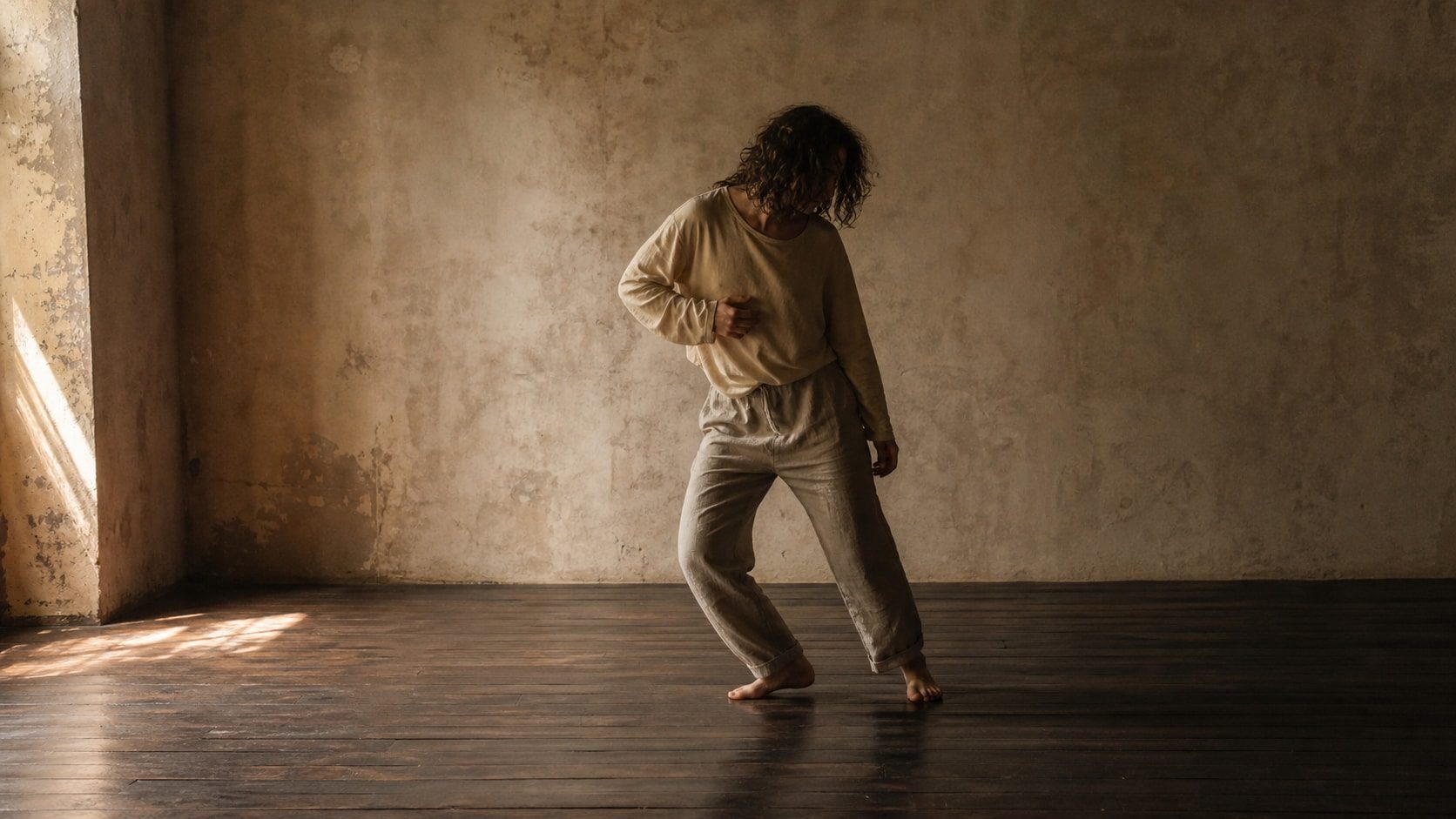
Inside that container, movement remains personal. One body needs to shake. Another wants to sway. Someone else lies down for twenty minutes and listens through their back.
All three are dancing.
The quieter dance
Ecstasy can arrive quietly.
The Greek word ekstasis points toward standing outside the ordinary self. That shift can happen through intensity, but intensity is only one door. Repetition can open it. Stillness can open it. A single hand moving slowly can hold an entire inner world.
This is difficult to remember in a culture built around images. Large movement is easier to film. Collective release makes a compelling reel. The private moment when someone finally unclenches their jaw is almost invisible.
The camera naturally selects one version of freedom. The dance floor contains many more.
What is the longing?
Caroline compares the chase for ecstasy to a craving for sweetness. When the obvious source of sweetness is removed, the deeper appetite becomes easier to feel.
Perhaps I came to the dance wanting intensity. Beneath that, I wanted permission to take up space. Perhaps I wanted touch, and beneath touch I wanted reassurance that I still belonged among other people. Perhaps I wanted release because I had been holding myself together all week.
The longing does not need to be solved before we move. It can become something we listen to.
Before the next dance, I want to carry three questions onto the floor:
- What movement would remain if nobody were watching?
- Can something small be enough right now?
- Am I following sensation, or an image of how freedom should appear?
There is no correct answer. The body may choose the largest movement in the room. It may choose stillness. The practice begins when the choice belongs to the body.
The next time a room reaches that beautiful collective peak, I will enter it gladly. When the room stays strange, uneven, quiet, or awkward, I will stay with that too.
What is your body asking for before you look around?