In a recent conversation, Alex said something that stayed with me: perhaps some events should stop calling themselves ecstatic dance.
He was speaking about a format built almost entirely around high energy. The music rises quickly, the room becomes loud, hands go into the air, people shout, and the energy remains close to a peak. There may be genuine pleasure and release in this. But there is little room for slowness, introspection, awkwardness, silence, or the emotions that do not look good in a photograph.
The question is not whether this kind of dance is valid. It is.
The question is whether we are using one name for several different promises.
A name is part of the container
If I go to a psytrance night, I expect psytrance. If the music is hardstyle, calling the event a meditation night would not make it meditative. The name helps me decide whether the room is right for me.
The same honesty should apply to ecstatic dance.
People often hear the word ecstatic and imagine visible excitement: a smiling crowd, arms raised, bodies jumping, a collective cry when the beat drops. That is one expression of intensity. I do not believe it is proof of ecstasy.
Ecstasy, as I understand it, is not a mood we perform. It is a threshold we may cross after moving through enough of what is actually present. Sometimes that passage includes joy and wildness. Sometimes it passes through grief, resistance, boredom, sensuality, fear, absurdity, stillness, or darkness.
If every difficult or quiet moment is removed, we may reach excitement without reaching depth. If we begin at the peak and stay there, we have not travelled through an arc. We have stayed in one climate.
There is nothing wrong with a summer beach. It is simply not the whole world.
Freedom still requires craft
Calling a dance freeform does not mean that no learning is required.
We would not enter a hospital and accept an untrained surgeon because being inexperienced had become fashionable. A new method may improve a practice, but newness is not a substitute for study. The freedom to innovate comes with the responsibility to understand what we are changing.
Facilitation asks for the same seriousness. Music moves nervous systems. The structure of a room changes how people meet, expose themselves, take risks, and return to ordinary life. A facilitator does not need to control those experiences, but they do need to understand the container they are holding.
This conversation helped me see a map. It is not a hierarchy of good and bad dancers. It is a vocabulary for three experiences that can coexist.
1. Release Dance
Release Dance is the high-energy form.
The music is direct and easy to enter. The rhythm gives the room a shared language quickly. People jump, sweat, shout, and lose themselves in repetition. The emphasis is on celebration, discharge, and collective trance.
This can be powerful. A person may finally let go of a week of pressure. A crowd may become one body. The release may be completely real.
The limitation appears when this single state is presented as the full ecstatic landscape. If the musical arc is designed only to make people rise, there is little support for the person who needs to descend. If visible enthusiasm becomes the measure of a successful night, dancers learn to produce the image of freedom.
Release Dance is an honest name for an honest pleasure. It does not need to borrow depth it was not designed to hold.
2. Classic Ecstatic Dance
Classic Ecstatic Dance is the form many people already recognise: a sober, usually barefoot, nonverbal dance floor guided by a DJ through a musical wave.
The agreements create more freedom than a conventional club. There is less social performance, less pressure to speak, and more permission to follow personal movement. The music may travel through several energies, and the dancer has space to choose how to meet them.
This is an important doorway. It can teach autonomy, listening, and the pleasure of moving without choreography.
Its depth varies widely. Some classic dances make room for a complete inner journey. Others keep returning to the most accessible peak. The name describes the container, but not necessarily how far the journey will go.
3. The Onizal Dance
The Onizal Dance is built to include more of a human being.
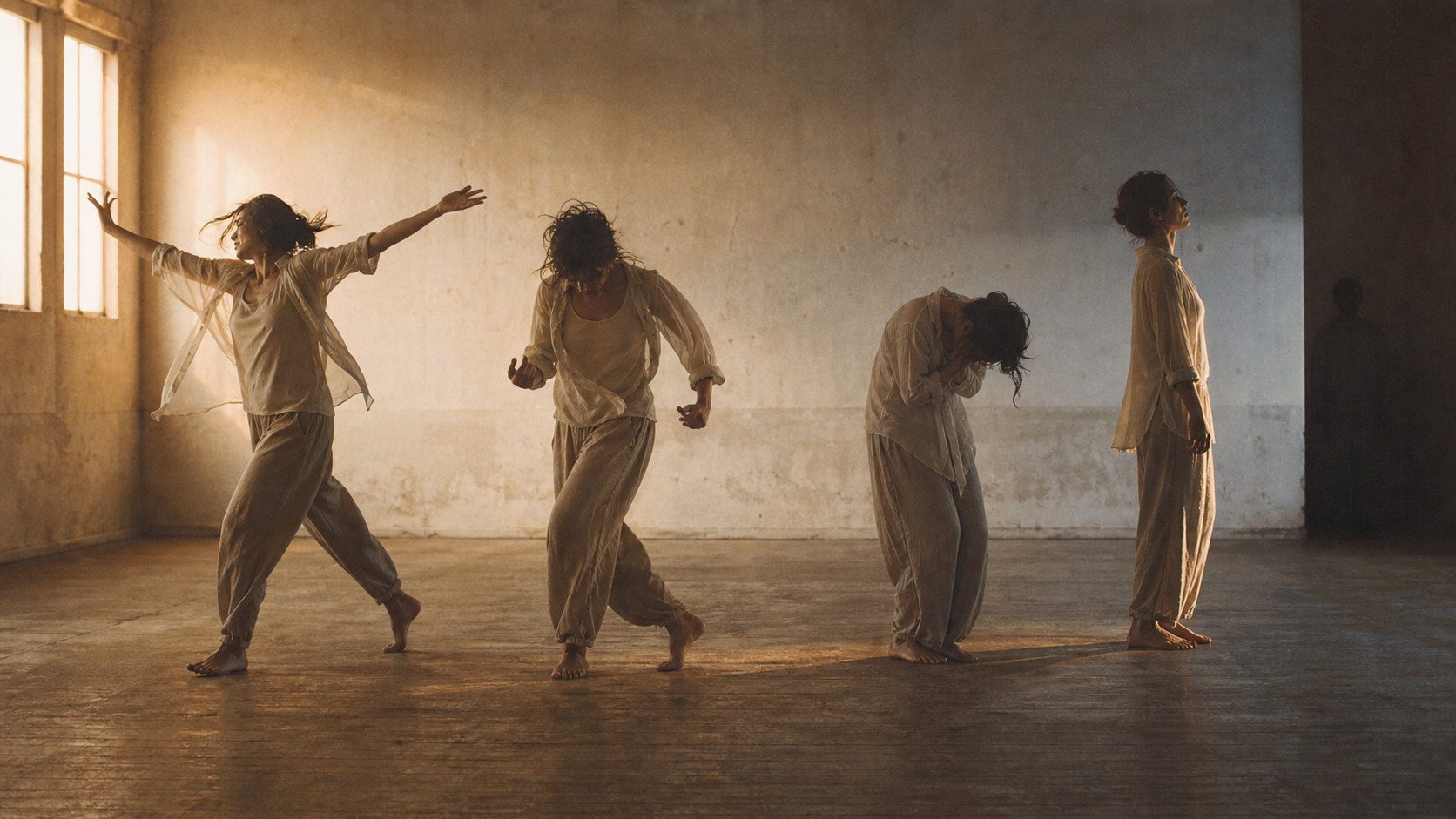
The arc makes space for slowness, silence, introspection, confusion, strangeness, humour, seriousness, shadow, tenderness, and joy. The music does not tell us that every moment must feel cool. A dancer can be radiant, uncomfortable, still, ugly, sensual, private, or lost without leaving the practice.
It can feel closer to an embodied art practice than to a party. The dance becomes a place to meet what is present, not a machine for producing a preferred emotion.
Here, ecstasy is not the compulsory atmosphere of the room. It is a possibility that may appear after the dancer has been allowed to move through a fuller range of experience.
The problem is not that every dance should go deep. The problem is promising depth while designing only for the peak.
For Onizal, this whole spectrum is the beginning of a deeper practice.
It is not only a DJ arc. We enter through ritual. We establish a relationship with the body in solo work. We learn how to approach another person through consent and clear signals. We meet the tribe. The free dance rises from that preparation, and the landing helps us integrate what happened.
With practice, the dance can become devotional. Movement is no longer only personal expression or emotional release. It can become a way of relating to something larger than the individual self: the room, the tribe, life, the unknown, or the divine.
Experienced practitioners may eventually adapt some conventions of ecstatic dance because they understand what those conventions protect. This is not permission to become careless. Freedom from a rule is not the same as ignorance of its purpose. Consent, attention, and responsibility remain.
The Onizal Dance is not the winner of the map. It makes a different promise: more preparation, more relationship, more range, and a longer path of practice.
Different rooms can coexist
Not everyone needs the deepest available experience every Friday night. Sometimes I want to sweat, shout, and celebrate. Sometimes I need a simple open floor. Sometimes I need a room capable of meeting grief, silence, or prayer.
The difficulty begins when all of these rooms use the same sign above the door.
Clear names give dancers agency. They help musicians compose with intention. They ask facilitators to be honest about their craft. Most importantly, they let each form become better at what it actually offers.
Before naming the next event, I want to ask:
- Are we offering celebration and release?
- Are we holding a classic open ecstatic floor?
- Are we inviting people into a whole-spectrum, relational, devotional practice?
These experiences can influence one another. Their borders will never be perfectly clean. A Release Dance can suddenly open into something profound. The Onizal Dance can become wildly joyful. The map is not meant to control what happens.
It is meant to make the invitation clear.
What kind of room are we building, and what are we honestly prepared to hold?